Anthropic study: robots can do 74% of US physical tasks but are cheaper than workers for 0.3%
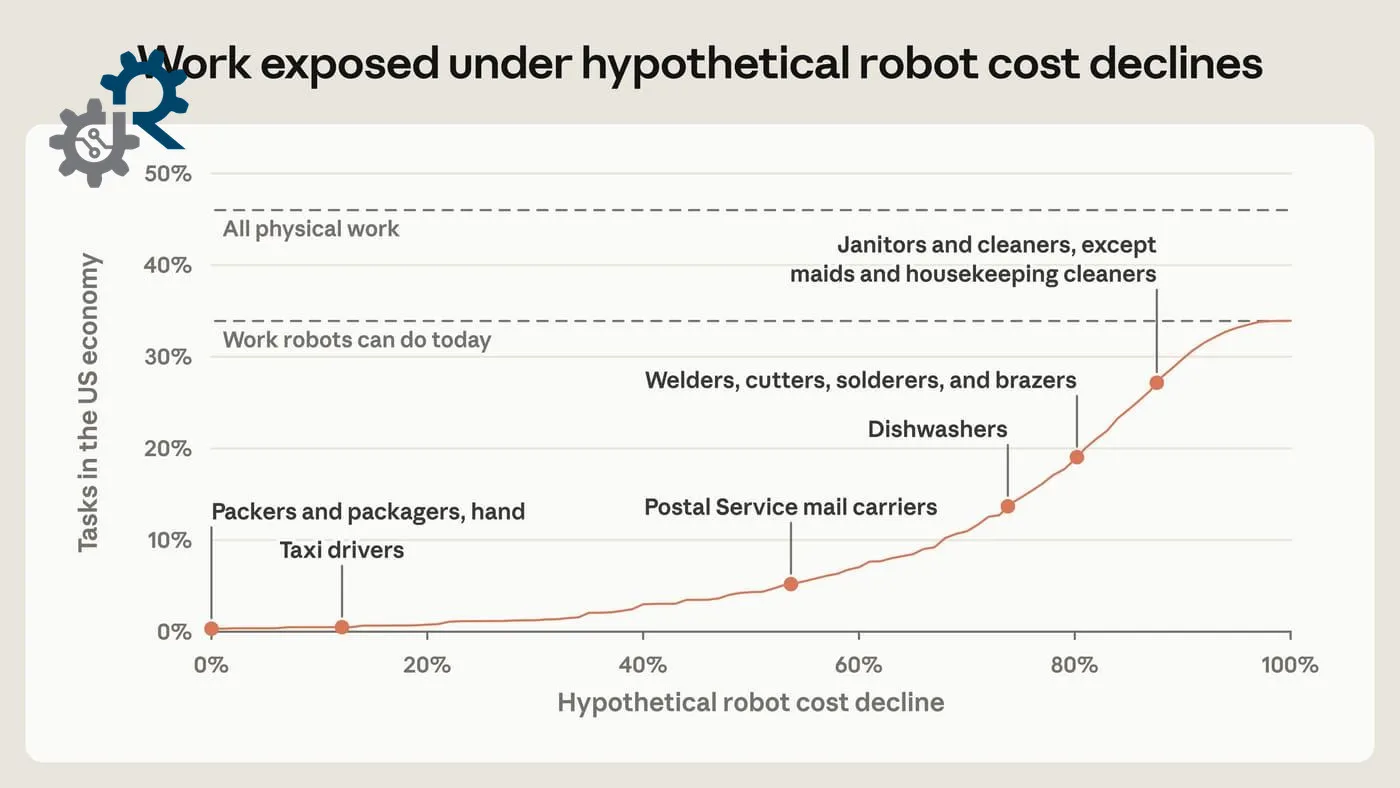
Image: Anthropic Economics team / "What work can robots do?" (Figure 8) · press-kit
An Anthropic economics study published on 30 September 2026 found robots could perform 74% of U.S. physical tasks but are cost-competitive for only 0.3% of job tasks.
Anthropic's economics team published a study on 30 September 2026 that estimates how much U.S. work robots can do today. Using the O*NET database of about 900 occupations and 19,000 tasks, it rated 7,594 physical tasks with the help of Anthropic's Claude model.
The study finds that robots can perform 74% of U.S. physical tasks, which make up 34% of working hours, mostly in limited settings. But robots are cheaper than human labour for only 0.3% of job tasks. At the historical rate of price decline, about 3% a year, it would take around 40 years for robots to become cost-competitive for 10% of tasks. Packers and packagers are the largest group where robots already compete on cost.
This is company research using model-rated tasks, not a peer-reviewed paper or a policy. It frames the debate about robots and jobs in terms of cost, not capability.
Sources
- Anthropic Primary source