Berkeley, NVIDIA and Bosch release Graph-as-Policy for robot workcells
Image: UC Berkeley / NVIDIA / Bosch, Graph-as-Policy project page · press-kit
The open-source CoRL 2026 Spotlight system has AI agents compose robot skills into a checked graph, reaching 0.93 to 0.99 success where vision-language-action baselines fall to about 0.20.
Researchers from UC Berkeley, NVIDIA and Bosch, with Ken Goldberg among the senior authors, released Graph-as-Policy (GaP), a CoRL 2026 Spotlight paper, together with its code and a 51-skill library. It targets tasks where a robot repeatedly handles objects of varying shape and position inside a fixed workcell.
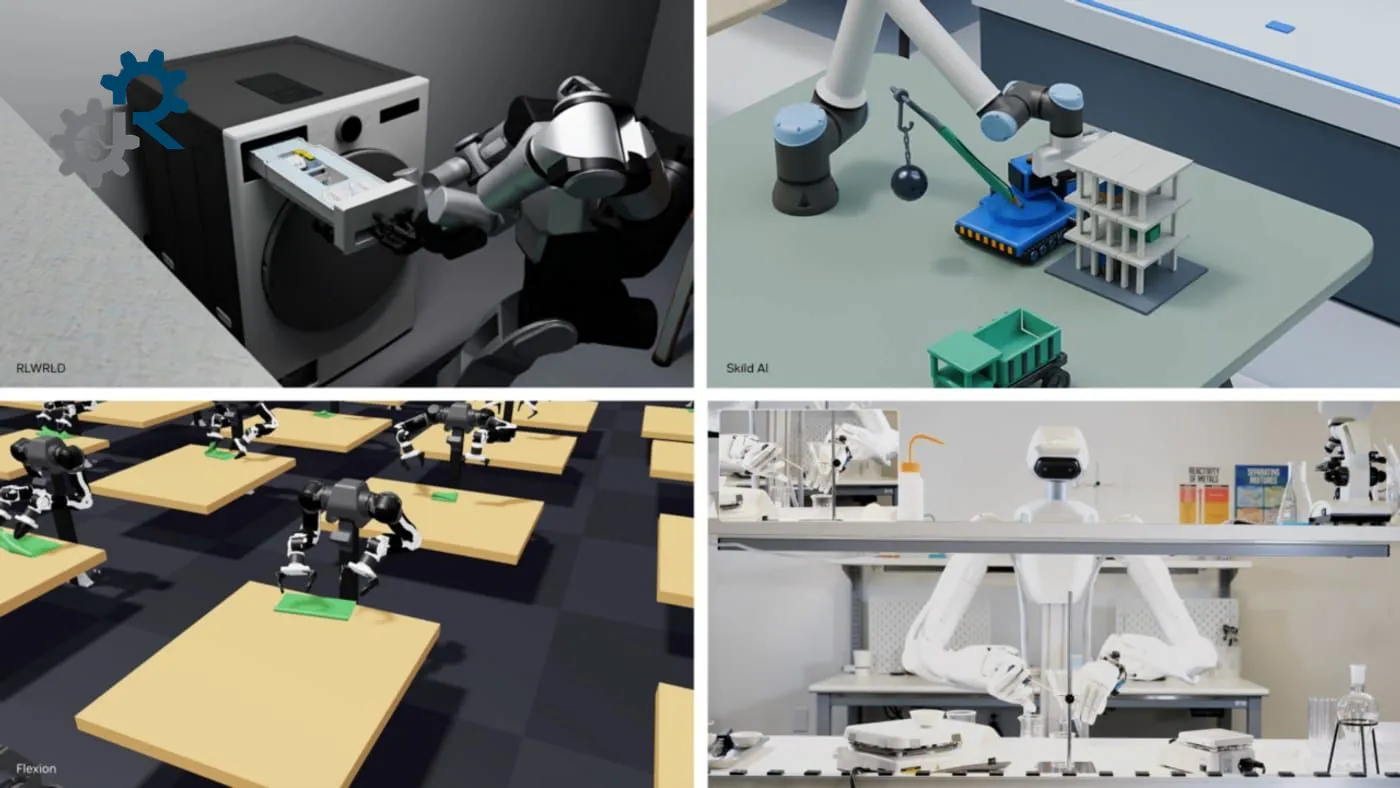
An orchestration agent splits a task into segments, and skill agents assemble sub-graphs from the library into one type-checked computation graph. The graph is rehearsed and repaired in simulation before it runs on a robot, with no task-specific training data.
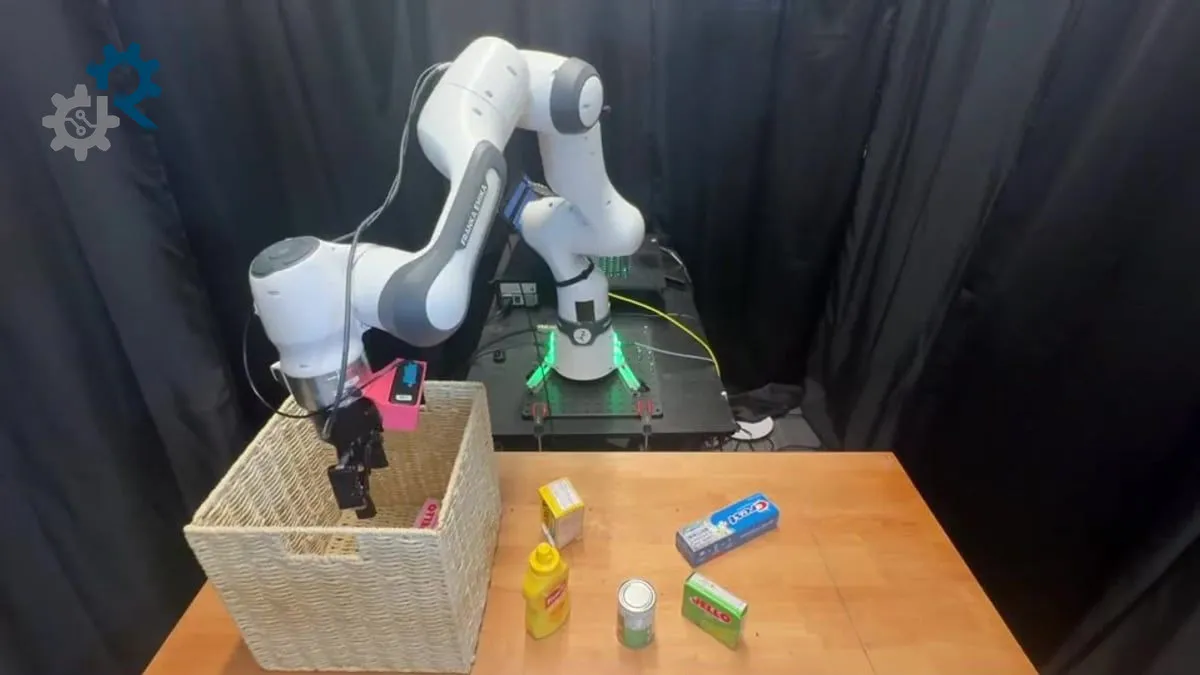
On eight benchmarks, four simulated and four real, the authors report 0.93 to 0.99 success under pose and geometry variation, where vision-language-action baselines fall to about 0.20. A Make Popcorn task rose from 33% to 94% in simulation and to 90%, 18 of 20 trials, on the real robot. On bimanual crate washing GaP scored 0.953 against 0.987 for a hand-engineered graph.
The results are the authors' own, and the project page describes quasi-static workcell tasks, not open-ended manipulation.
Sources
- UC Berkeley, NVIDIA and Bosch authors Primary source