An EEG interface lets wearers command two extra robotic arms
Image: Jia et al., Nature Communications 2026 (CC BY 4.0) · cc-by
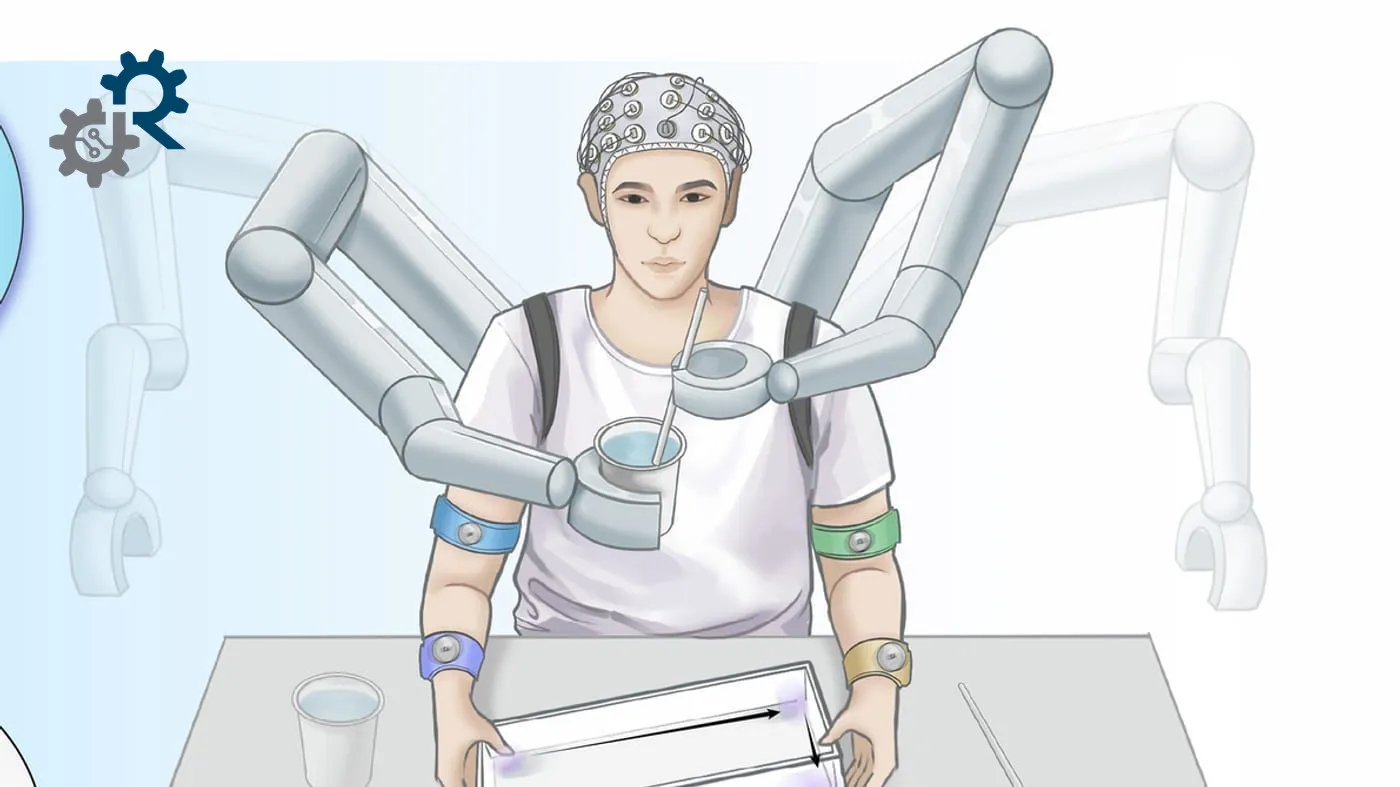
Imperial College London used wrist and elbow vibrations to evoke P300 brain responses, letting 10 volunteers command two extra robotic arms while their own hands kept working (Nature Communications, 2 July 2026).
A team led by Dario Farina at Imperial College London, with first author Tianyu Jia, published a brain-computer interface for extra robotic limbs in Nature Communications on 2 July 2026. The study drew wider attention in November through PsyPost's coverage.
The interface reads brain activity with a 64-electrode EEG cap. Four small vibrators near the wrists and elbows pulse in random order; the user silently attends to the one linked to the desired command, which produces a P300 response the decoder matches to that vibrator. Each detected choice triggers a preset movement of one of two tabletop robotic arms.
Ten able-bodied adults trained for three days while balancing a ball on a tray with their own hands. Command accuracy during that dual task rose from 53.1% on day 1 to 69.7% on day 3, against 79.1% when sitting still, and by day 3 the gap was no longer statistically significant.
Each command still takes several seconds, the arms run preprogrammed routines rather than proportional control, and none of the volunteers had a disability.
Sources
- Nature Communications Primary source
- PsyPost