A non-invasive brain-computer interface responds to a third of unresponsive brain-injury patients
Image: Rudy Diaz / Columbia University Irving Medical Center · press-kit
A Columbia study in Brain, published on 22 October 2026, found that 13 of 41 clinically unresponsive patients could control an EEG brain-computer interface.
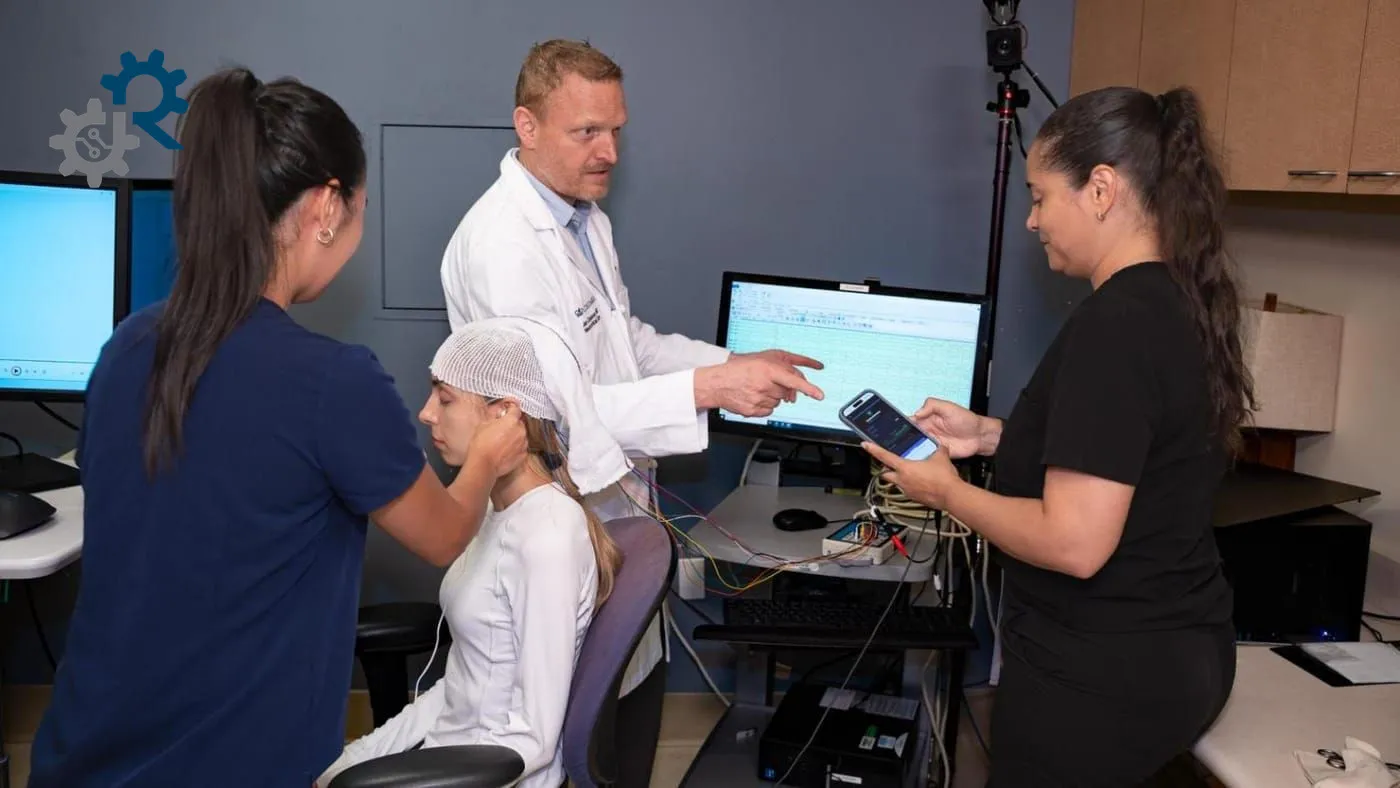
A study published in Brain on 22 October 2026 by researchers at Columbia University Irving Medical Center and NewYork-Presbyterian tested a non-invasive EEG brain-computer interface on 41 clinically unresponsive patients with acute brain injury in intensive care, alongside 22 conscious critically ill patients and eight healthy volunteers.
Thirteen of the 41 unresponsive patients, or 32%, gained control of the interface, which lets a user change a tone by imagining movement. Control was associated with recovery: six of those 13 were functionally independent at 12 months, against two of the 28 patients who did not gain control. The authors present control of the interface as a strong predictor of outcome.
It is an observational result from a single centre, so it shows an association, not a cause. The system controls a tone and cannot yet express needs or answer questions, and the findings have not been replicated at other hospitals.
Sources
- Brain (Oxford University Press) Primary source