MIT steers a paper-thin robot powered by muscle cells through a water maze
Image: Melanie Gonick, MIT · press-kit
MIT researchers reported on 29 September 2026 a half-millimetre robot film carrying light-responsive muscle cells, steered by flashes of light through a maze.
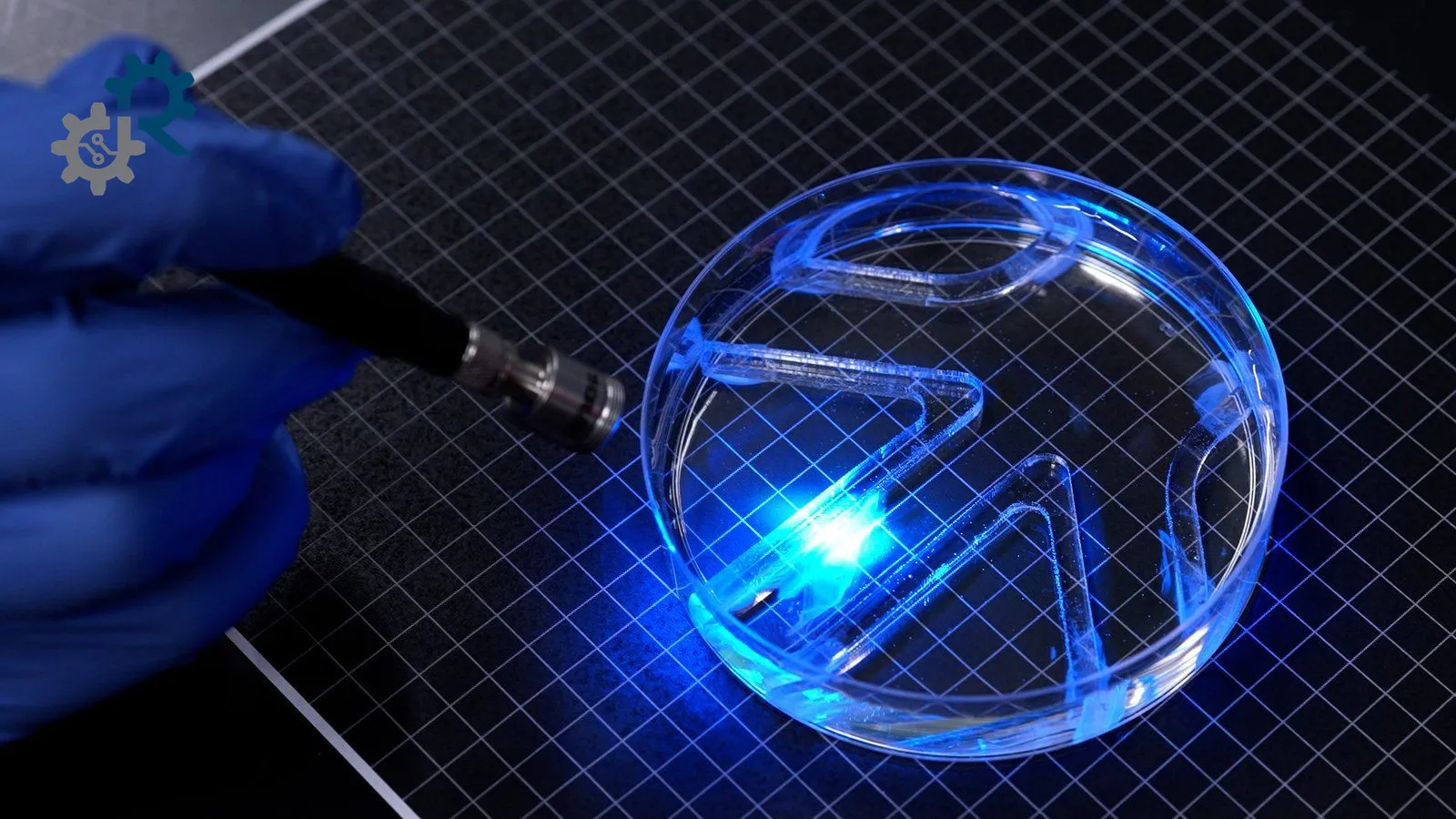
Researchers in Ritu Raman's lab at MIT described on 29 September 2026, in the journal Advanced Functional Materials, a small swimming robot powered by living muscle. Its body is a half-millimetre-thin film of GelMA hydrogel carrying a single layer of skeletal muscle cells that contract in response to light, arranged on two fins.
Flashing light on one fin or the other makes the robot turn, which let the team steer it through a simple maze in water. Its top speed is about four body lengths per minute, well beyond the lab's earlier iris-shaped design, which moved about 100 microns. The work was supported in part by the U.S. Office of Naval Research.
The robot is a laboratory demonstration with no practical application yet. Biohybrid robots are a research field in which universities test how living tissue can serve as an actuator, and the methods used here can be followed in a well-equipped lab.
Sources
- MIT News Primary source