XPeng and academic partners release GroundingPI, an open-source vision model for robots
Image: XPENG / press room · press-kit
On 4 November 2026 XPeng and academic partners released GroundingPI, a 4-billion-parameter open-source perception model for physical AI, with weights and code public.
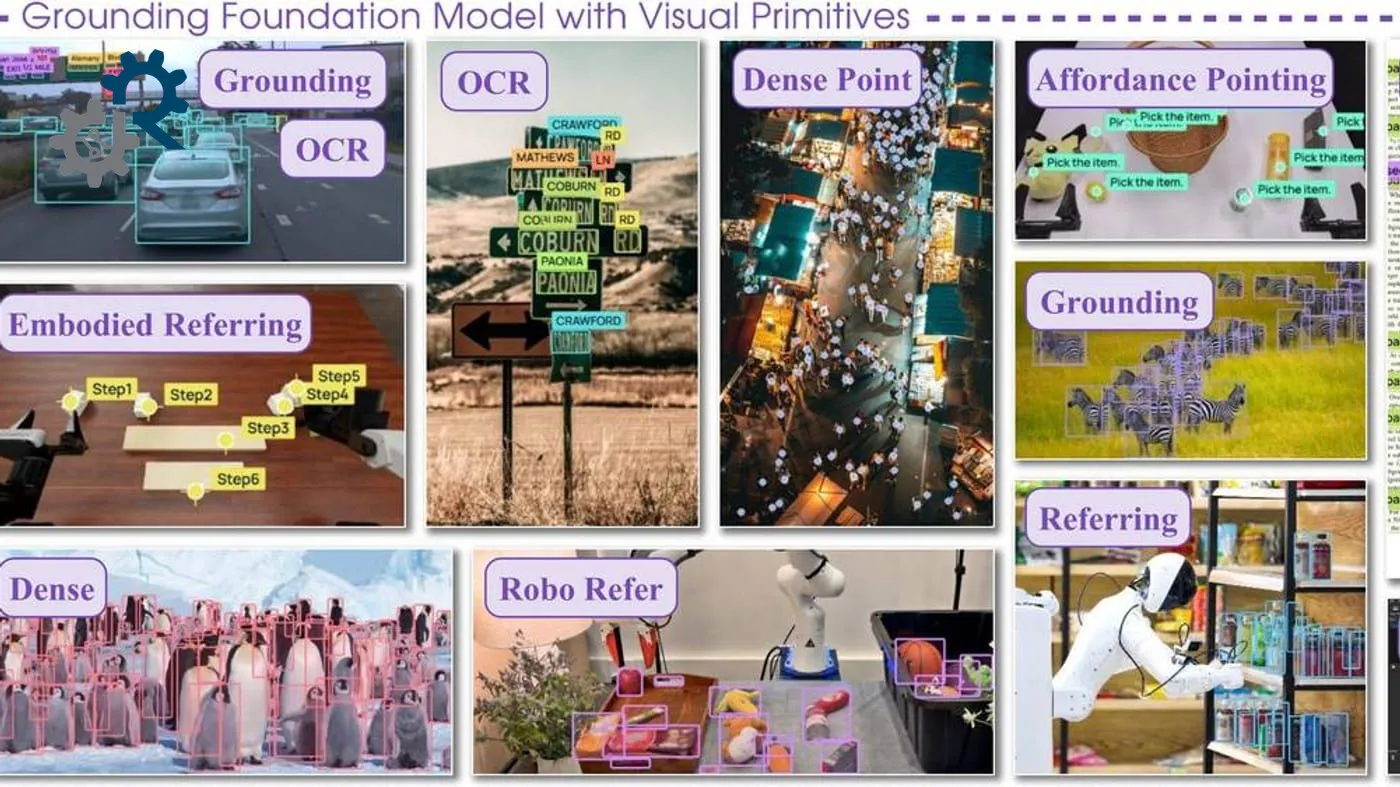
XPeng and academic partners introduced GroundingPI on 4 November 2026, an open-source visual perception foundation model for physical AI. It locates objects and their positions as points and bounding boxes, and is trained across 11 perception capability categories. The model has about 4 billion parameters. Its paper, weights and code are public, and the release names Peking University and the University of Hong Kong among the partners.
In the team's own evaluation, GroundingPI scored 73.68 on an equally weighted aggregate across 34 public perception benchmarks, against 71.54 for GPT-6 Astra, with 44 baseline models compared. In the RoboCasa-GR1 simulation, robot learning systems using it as their visual backbone reached higher task success with 50% of the demonstration data than comparison models did with 75%.
XPeng says the comparison covers perception benchmarks only and does not assess general intelligence or reasoning. It calls the research exploratory, notes that downstream results come from simulation and offline evaluation, and says the release is not an announcement of integration into XPeng products, including its IRON humanoid. The release does not name a specific open-source licence.
Sources
- XPENG Primary source