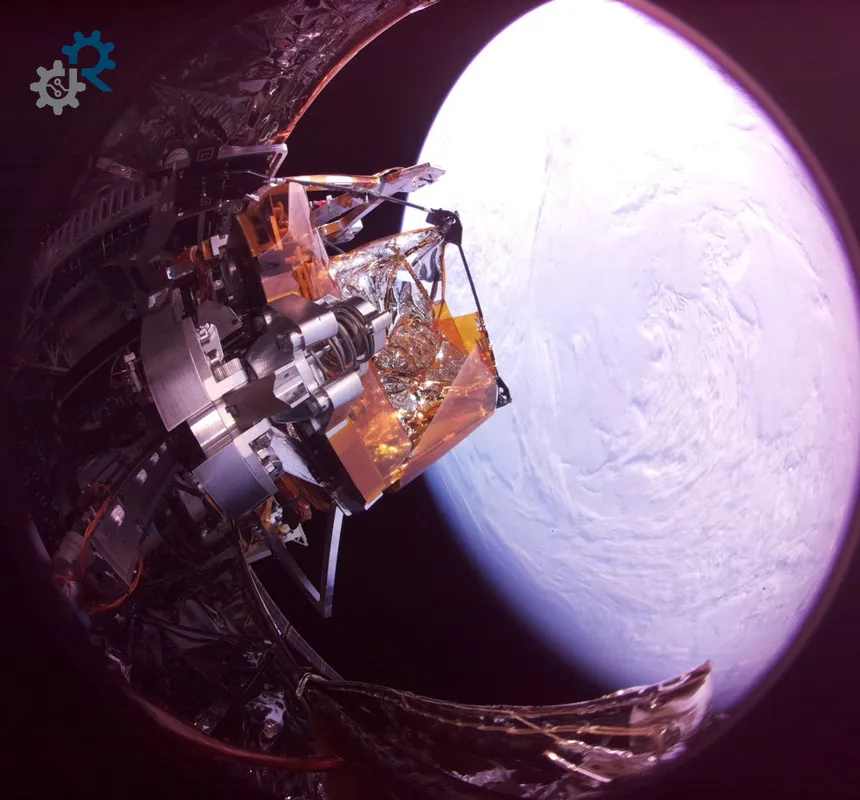
Caltech's ASTRA robot builds a truss bay in orbit
Image: Caltech/Momentus · press-kit
Caltech reported on 5 November 2026 that its DARPA-funded ASTRA payload autonomously built a third truss bay in orbit, after launching with two prebuilt bays.
Caltech reported on 5 November 2026 that its ASTRA payload, short for Autonomous In-Space Tensioned Reflector Assembly, had autonomously built a structure in orbit. The payload launched on 30 March 2026 from Vandenberg Space Force Base aboard Momentus's Vigoride 7 vehicle, which rode on SpaceX's Transporter-16 mission. It carried two prebuilt truss bays, and its autonomous manipulator assembled a third.
ASTRA was funded by DARPA's NOM4D programme and led by Caltech's Sergio Pellegrino. The payload is about one cubic metre in size and carries 11 cameras. Caltech says the team ran out of time and built only the initial section of the planned 1.4-metre reflector antenna, and that the full truss would have needed 11 bays. The mission ends in December 2026.
"This is the first time that a structure has been autonomously constructed in space," Pellegrino said in the Caltech release. DARPA's separate release describes the work as a step toward assembling structures hundreds of metres to kilometres long, which is the programme's stated goal and not something ASTRA has demonstrated.