Rendezvous Robotics raises $20 million for self-assembling spacecraft
Image: Rendezvous Robotics (via Payload) · press-kit
Payload reported on 28 October 2026 that Rendezvous Robotics raised $20 million to build spacecraft from tiles that join in orbit.
Rendezvous Robotics has raised $20 million, Payload reported on 28 October 2026. The round was co-led by MaC Venture Capital and Toyota Ventures, with the University of Michigan Endowment, Astera Ventures, Industrious Ventures, Aurelia Foundry, ATX Venture Partners and Mana Ventures among the participants.
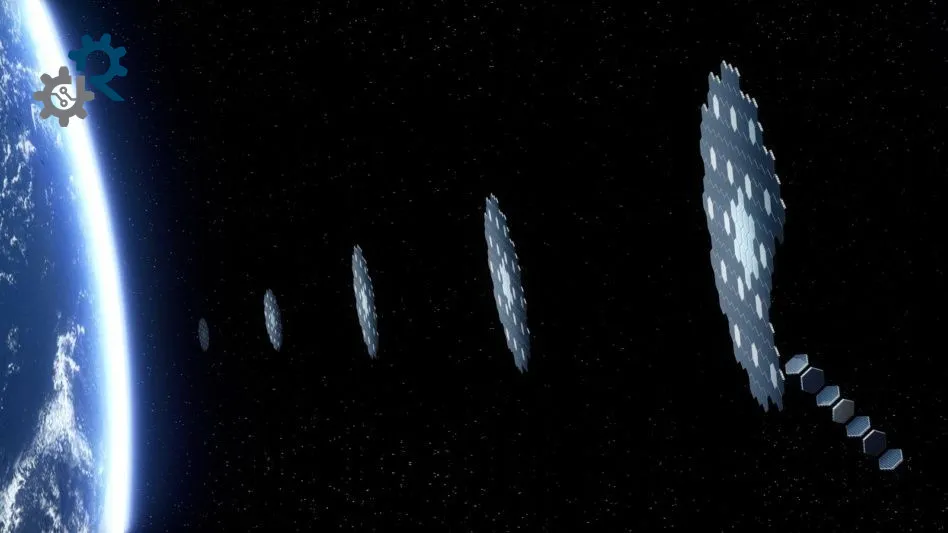
The company builds roughly one-metre hexagonal tiles, each with sensors and onboard processing, that join together in space using electromagnetic fields. Its current focus is satellites, with tiles able to hold subsystems such as computers, solar panels, propulsion and radiators. The technology traces back to MIT's TESSERAE program.
The next orbital mission, with 32 tiles, is planned for the International Space Station no earlier than December, though the article does not give the year. The funding supports an in-space demonstration with seven tiles, planned for no earlier than April 2028, which would be the first time the tiles fly in vacuum to test whether they can assemble and reconfigure into one working satellite.
Payload does not label the round's stage, and no company release was available to read. Technical performance in orbit has not yet been shown.